Easier for online registration for customers

Context

Currently, customers can buy insurance in two ways:

  1. Online
  2. By phone, through an agent

After buying, they have the option to create an online account to view and manage their policies.

However, many customers still relied on calling for tasks that could be done online. Even though the platform allowed for self-service, sign-ups were lower than expected. This created friction for customers and increased demand on support channels.

Thus, we saw an opportunity to make registration easier, helping customers get more value from the online platform while reducing reliance on call centers.

Goal

Improve registration rate to help customers self-serve their insurance needs

Results

37% increase in number of self-registered users year-over-year
Met yearly registration penetration goals 4 months early
$1.2 million in projected savings through reduced call volumes

Initial problem statement

How might we help more customers create accounts effortlessly?

Known problems

1. No direct way for customers to register after purchase

Diagram showing ideal 4 step process for account creation

Currently, customers have no smooth way to create their online account right after purchasing an insurance policy. They must exit out of the flow and go through a separate registration flow. This happens regardless if they bought online or through an agent.


High-level Solution

Create a direct path for customers to register after purchasing

2. Long registration process
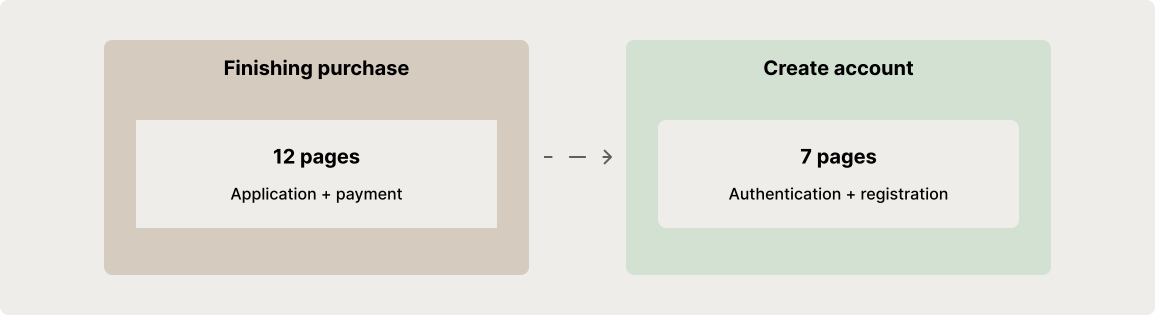
Diagram showing ideal 4 step process for account creation

After purchasing insurance, customers are asked to complete a 7-step registration flow that repeats many of the same questions from the 12-page purchase flow (e.g., full name, date of birth, address).

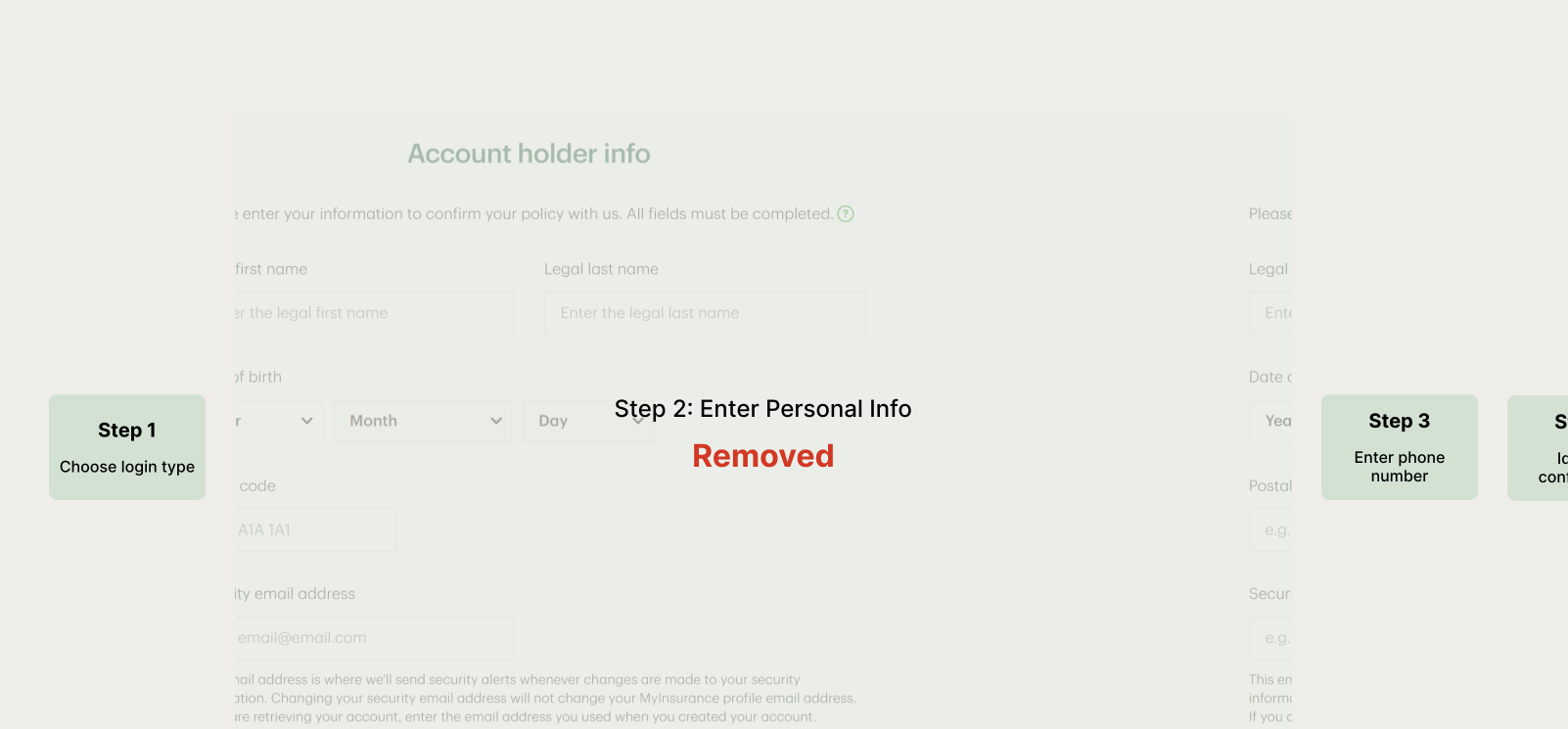
The page where customers had to re-enter their personal information saw a 55% drop-off rate, likely due to form fatigue and frustration after already completing a long purchase process.


High-level Solution

Remove the page where personal information is asked by sending a pre-authenticated link to customers.
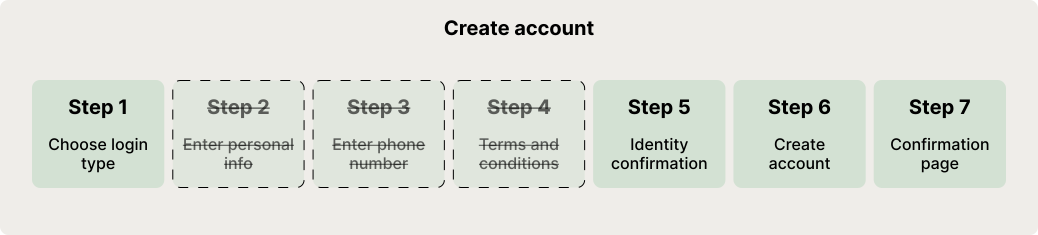
New problems

These solutions were presented by our feature team partners, who are responsible for the high-level solutions. It was now up to us - the delivery team - to make it happen.

As I explored the problem working with my team, we came to three realizations:

  1. Ownership - The steps of the registration flow are owned by different teams, meaning any change would require buy-in from those teams.
  2. Legal and Compliance - Approval was required for any changes related to personal identifiable information or consent, which was where most user irritants were.
  3. Timeline - This all had to be released within 2 months, from design to development. (which is really fast in the banking world)

Revised problem statement

How might we help more customers create accounts effortlessly, working with three different development teams, dealing with legal stakeholders, and with less than 2 months till launch?

Approach

After aligning with the product owner, it became clear that the main challenge wasn't just design — it was feasibility. With multiple teams involved and a tight two-month timeline, I focused on solutions that balanced user impact and technical constraints.

To guide decision-making, I developed three versions of the same flow, ranging from the ideal long-term vision to an immediate release.

Ideal state vision

A fully simplified registration experience with a single, streamlined username and password creation step. This version offered the best user experience but required significant development and legal oversight.

Diagram showing ideal 4 step process for account creation

Near future

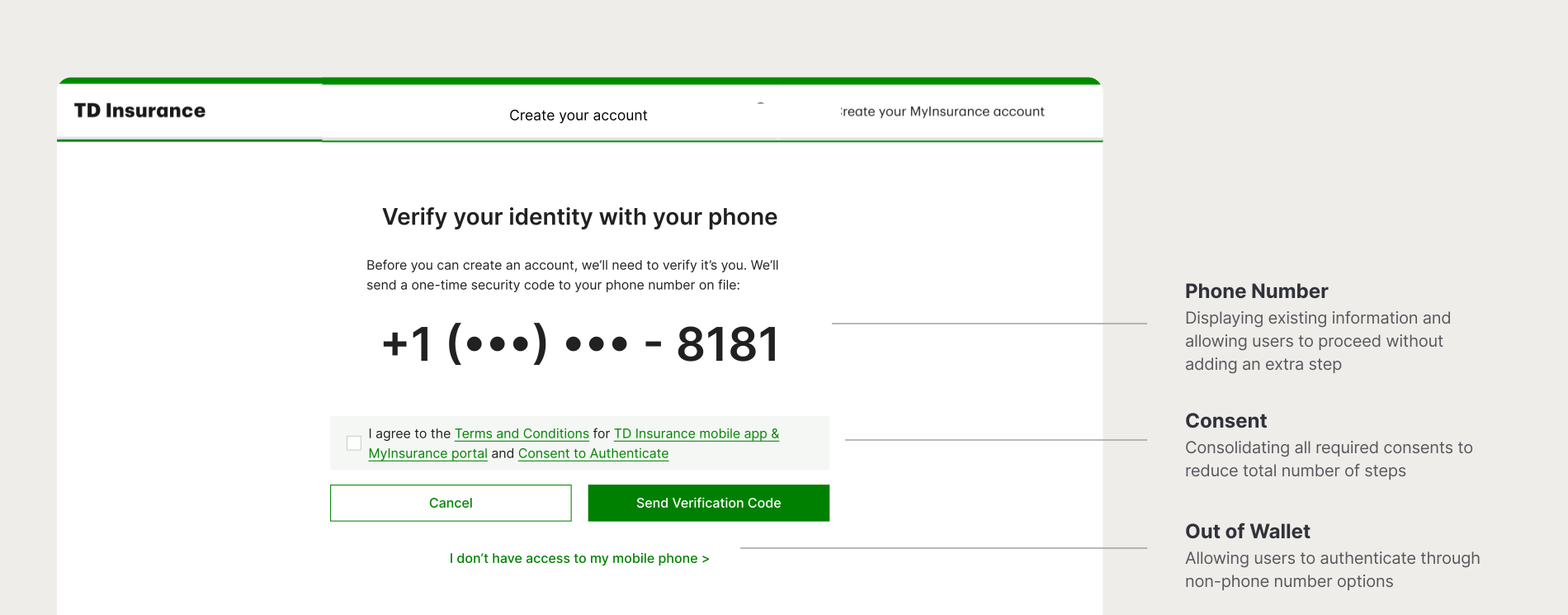
A partially optimized flow that streamlined the identity proofing process and consent - one of the biggest customer pain points - while reducing some of the legal complexity.

Diagram showing short-term 5 step process for account creation

Minimal Viable Product

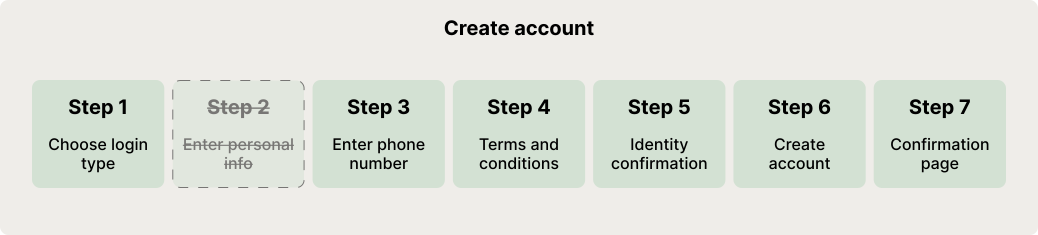
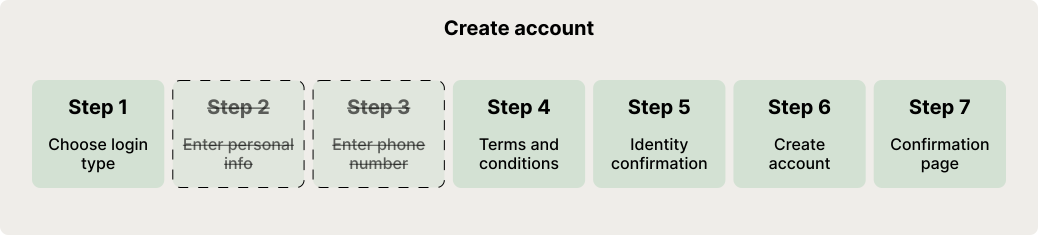
A pragmatic version addressing immediate usability issues: removing the page that caused the highest drop-off, and ensuring a smoother transition from purchase to registration.

Diagram showing immmediate 6 step process for account creation

Key Insight

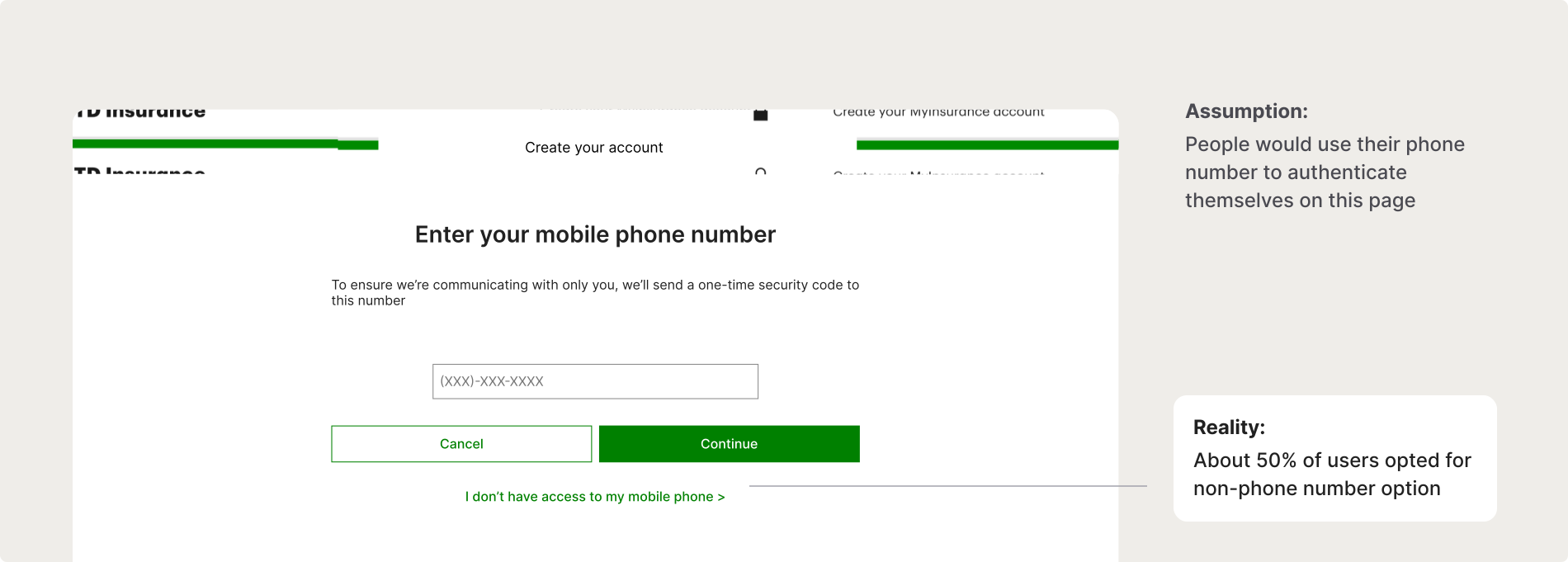
One of the the steps, Enter phone number, was originally considered to be obsolete and agreed to remove it in the MVP. After all, if we have all their information, why would they need to enter their phone number?

However, after analyzing behavioral data, I discovered that 50% of customers were intentionally choosing to authenticate using Out of Wallet questions (verification using personal historical data, like "What years did you live in Toronto?").

This meant that if we removed the "Enter phone number" step, 50% of our users would've had no way to proceed - and be foreced to call in. The opposite of what we wanted to happen.

Diagram showing immmediate 6 step process for account creation

This realization shifted our focus. Instead of simply removing friction, we reframed the problem around supporting user intent while reducing effort. This insight was a turning point that shaped the final design decisions across all three design options.

Solution Overview

The MVP delivered a connected post-purchase registration experience. Customers could now register immediately after purchasing their insurance policy, without re-entering information they already provided.

Key customer data such as name and date of birth was automatically passed from the purchase journey, removing redundant questions and effectively removing top customer detractor.

Diagram showing immmediate 6 step process for account creation

In parallel, I proposed a future state version that would further streamline the registration process. This direction established a long-term vision for a seamless registration experience, in-tune with competitors and customer expectations.

Diagram showing immmediate 6 step process for account creation

Want to learn more?

Feel free to contact me at ndpark97@gmail.com