Grew registration penetration 6.6 points year-over-year.
Context
Customers weren't using the platform we built for them.
The insurer offered online account management for policyholders. Most still called in for tasks they could handle themselves. The problem wasn't awareness — it was friction. The path from buying a policy to having an account broke in two places.
As the UX lead on the delivery team, I translated the high-level solution into a shippable experience. I navigated multi-team ownership, legal approval cycles, and a two-month deadline. My work spanned flow design, stakeholder facilitation, and behavioral data analysis.
Private case study
This case study is under NDA
The detailed process, design decisions, and outcomes are available to recruiters and hiring managers.
Goal
Improve registration rate to help customers self-serve their insurance needs
At a Glance
Initial problem statement
How might we help more customers create accounts effortlessly?
Problems
Customers weren't using the platform we built for them.
The insurer offered online account management for policyholders. Most still called in for tasks they could handle themselves. The problem wasn't awareness — it was friction. The path from buying a policy to having an account broke in two places.
The journey, as it was
Buys a policy
online or via agent
Registration
7 separate steps
Account created
most never arrived
Problem 1
No way in after purchase
Buying a policy never connected to creating an account. Customers had to exit and find registration on their own — whether they bought online or through an agent.
Problem 2
A 7-step wall that asked twice
Registration re-asked for name, date of birth, and address — data already given during purchase. That re-entry page alone dropped 55% of customers.
What made it hard
The path to fixing both ran through three constraints the brief didn't mention.
Multi-team ownership
The flow crossed three dev teams. Any change to a step needed buy-in from its owner. The design couldn't just be good — it had to be proposable.
Legal
The pages driving the most drop-off involved PII and consent — exactly what required formal legal sign-off. We couldn't move fast on the things that mattered most.
Two months, end-to-end
Design to dev handoff in under eight weeks meant no exploratory rounds. Every decision had to be defensible on the first pass.
Revised problem statement
How might we help more customers create accounts effortlessly, working with three different development teams, dealing with legal stakeholders, and with less than 2 months till launch?
Approach
After aligning with the product owner, it became clear that the main challenge wasn't just design — it was feasibility. With three teams involved, legal gatekeeping, and two months on the clock, the highest-leverage move wasn't picking the best design — it was designing three options that made the tradeoffs legible to every stakeholder who needed to say yes.
Ideal state vision
A fully simplified registration experience with a single username and password creation step. This version offered the best user experience but required significant development effort and legal oversight.
Original registration steps
Near future
A partially optimized flow that removed the two most friction-heavy re-entry steps. Legal required Terms and Conditions to stay as a standalone page — so that step remained.
Original registration steps
Minimal Viable Product
The MVP targeted the worst drop-off point directly: removed the personal-info re-entry page, and added a direct path from purchase to registration.
Original registration steps
Key Insight
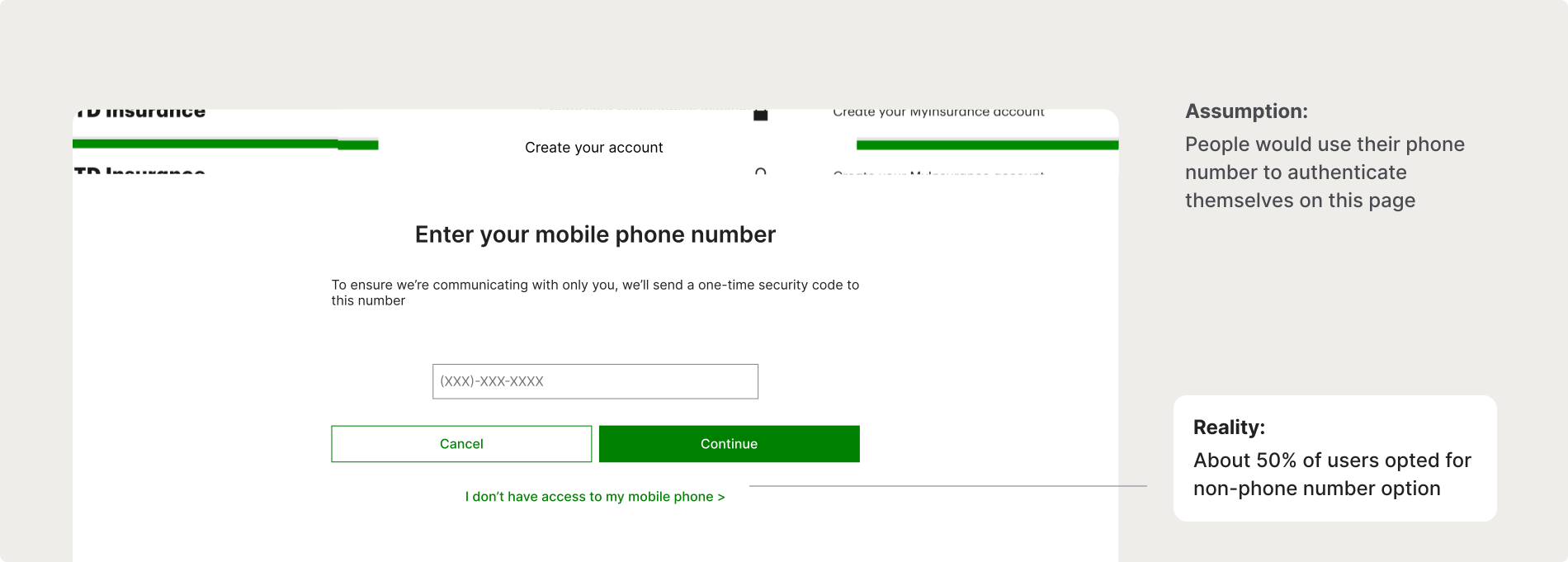
The Enter phone number step was originally agreed to be removed in the MVP — if we already had all their information, why ask again? But after analyzing behavioral data, I discovered that 50% of customers were intentionally choosing Out of Wallet authentication, a method that verifies identity using personal historical data rather than a phone number.
This meant that removing the step would have left half our users with no way to proceed — forced to call in instead. The opposite of what we wanted.
Working with Product and Business, we detertmined that it would be best to leave this option for the time being until next iteration.
Solution Overview
What we built and why
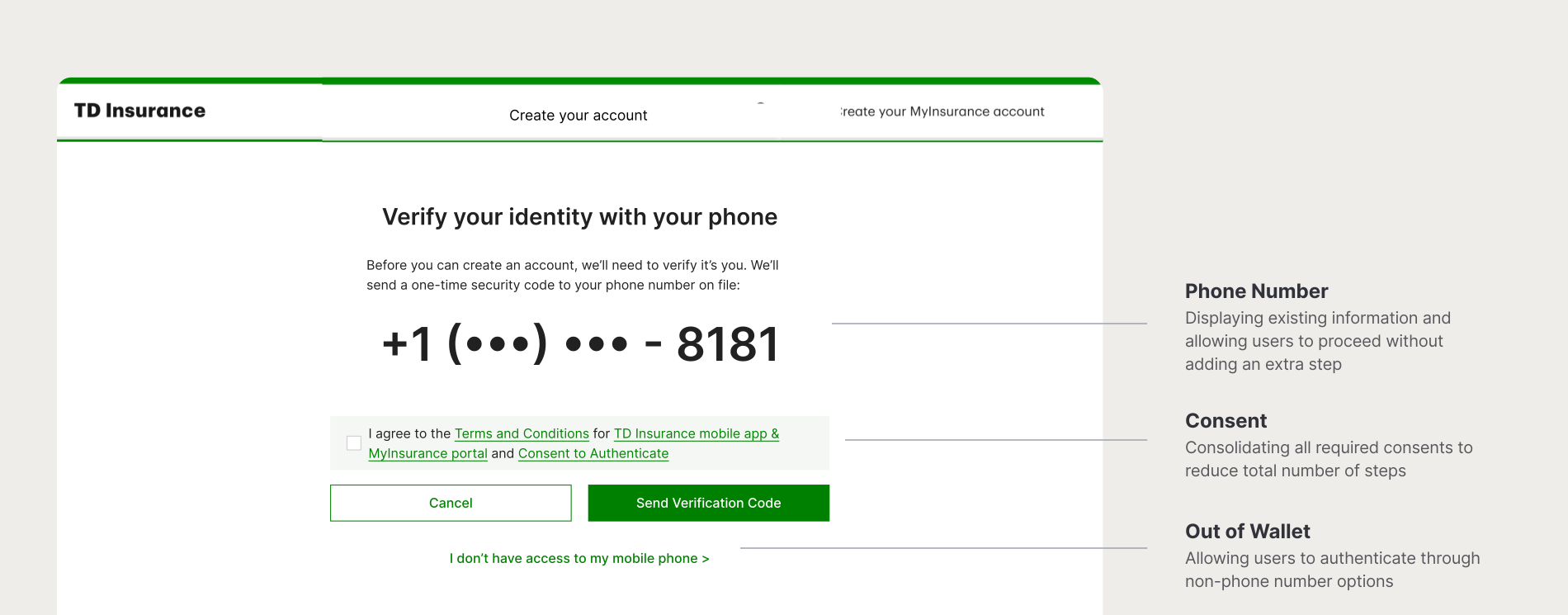
The MVP connected the purchase and registration flows for the first time. When a customer completed a policy purchase, they were offered a direct path to create their account — no separate journey, no starting over.
The journey, as it became
Buys a policy
online or via agent
Registration
pre-filled, fewer steps
Account created
for the first time, by design
Three specific decisions defined the solution:
- Pre-authenticated link: Key data (name, date of birth, address) collected during purchase was passed forward automatically, eliminating the step with the 55% drop-off. Customers weren't being asked to prove who they were to a system they'd just used.
- Preserved authentication choice: Both paths (SMS and Out of Wallet) were surfaced equally. This reflected how customers actually authenticate — not how we assumed they would.
- Post-purchase entry point: A registration prompt was added to the purchase confirmation screen for both online buyers and agent-assisted buyers. The path to account creation existed regardless of how a customer came in.
Looking ahead
The future-state went further: one credential creation step, with identity verification using data the bank already held.
Results
The changes shipped on time. Registration climbed, the annual targets were hit ahead of schedule, and the reduction in call volume showed up in projected savings.